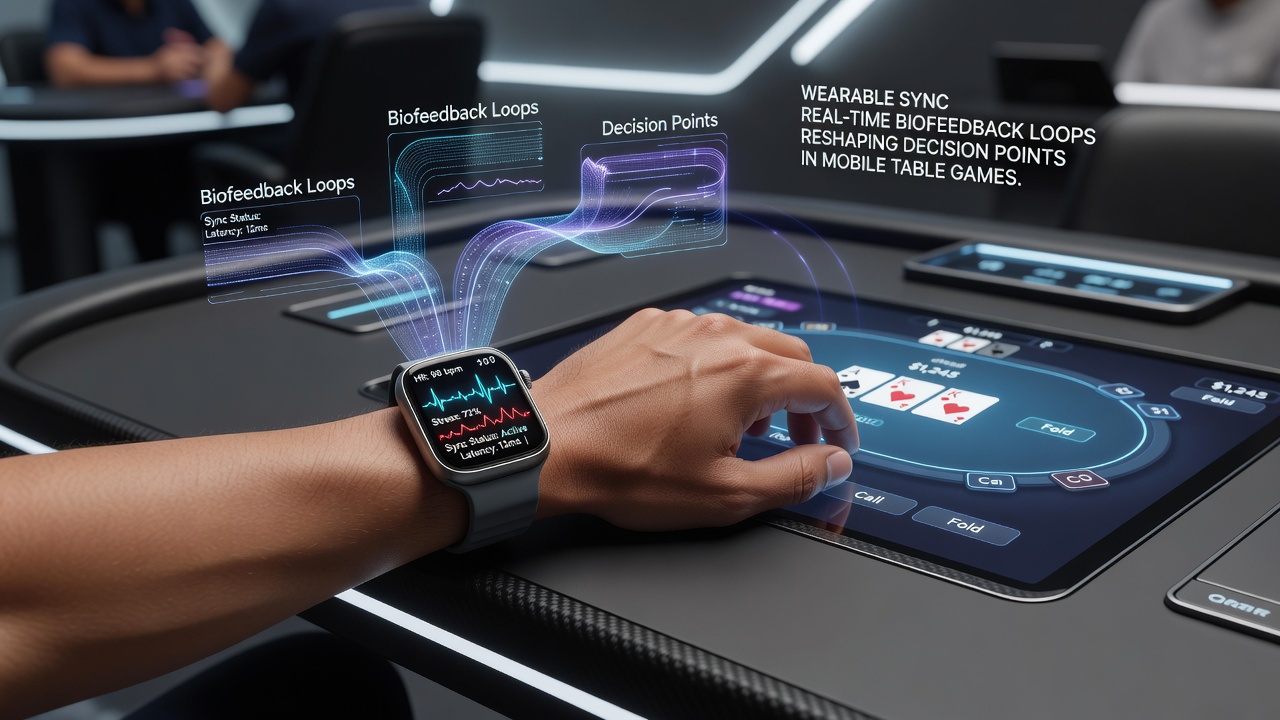
Wearable Devices and Biofeedback Systems Reshaping Choices in Mobile Table Games
Developers have integrated wearable sensors with mobile table game platforms to capture physiological signals such as heart rate variability and skin conductance, then route those signals into decision interfaces during sessions of blackjack, poker, and roulette variants. Systems transmit data through Bluetooth connections to adjust visual cues or prompt timing windows that influence when players place bets or adjust strategies. Data from device manufacturers shows adoption rates climbing steadily through 2025 into October 2026, with several major app studios embedding application programming interfaces that accept input from common smartwatch models.
Core Components of Sync Technology
Hardware manufacturers supply optical heart rate monitors and electrodermal activity sensors that sample at frequencies between 1 and 100 hertz, while companion software on the phone processes streams in under 200 milliseconds to maintain perceived responsiveness. Game engines receive these streams through secure sockets and map elevated arousal markers to specific on-screen elements such as highlighted hit-or-stand buttons in blackjack or fold timers in video poker. Engineers at multiple studios report that latency below 150 milliseconds preserves the illusion of seamless feedback without introducing perceptible delay during rapid decision sequences.
Biofeedback Loops in Practice
Real-time loops operate by comparing baseline readings collected at session start against live sensor output, then triggering conditional logic that may dim or brighten action buttons when physiological thresholds cross preset values. One documented implementation registers increased skin conductance as an indicator of potential impulsivity and extends the confirmation delay on raise actions in poker by 800 milliseconds. Studies conducted at university laboratories in North America have measured changes in decision latency when such adjustments activate, with participants showing average increases of 12 percent in time spent evaluating options under modified conditions.
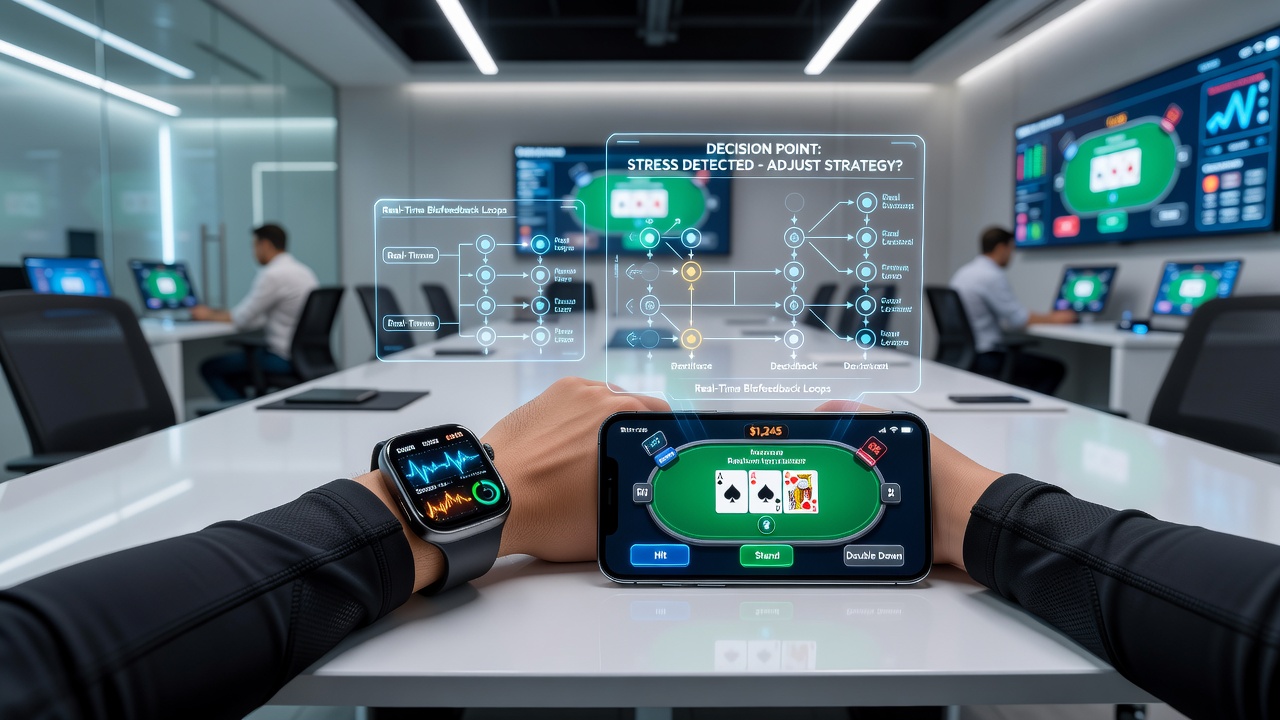
Observed Effects on Decision Timing
Researchers tracking thousands of anonymized sessions note that biofeedback prompts correlate with shifts in betting volume during high-arousal periods, particularly when heart rate exceeds 110 beats per minute. Applications developed in Australia and Canada incorporate optional toggles that allow users to receive haptic pulses from the wearable itself rather than visual overlays, reducing screen clutter while still conveying urgency. Figures released by the Canadian Gaming Association indicate that titles employing these loops maintained session retention rates 7 to 9 percent above control versions without physiological input during controlled A/B tests completed in early 2026.
Technical Standards and Data Handling
Standards bodies including the IEEE have published draft guidelines for secure transmission of biometric streams in entertainment contexts, requiring end-to-end encryption and explicit user consent before any sensor data leaves the local device. Developers must segment biometric identifiers from account identifiers to comply with emerging privacy frameworks in the European Union and select U.S. states. Several platforms now store only aggregated trend data rather than raw waveforms, limiting exposure while still enabling pattern analysis that refines future feedback thresholds.
Integration Examples Across Platforms
One European studio released an update in September 2026 that pairs Apple Watch and Garmin devices with its mobile baccarat variant, mapping elevated pulse to a temporary reduction in maximum bet size until readings return below the user-defined threshold. Parallel testing in Asian markets paired the same hardware with mahjong-based table games, where biofeedback adjusted tile-draw pacing rather than wager amounts. Observers at industry conferences note that cross-device calibration routines now complete in under 30 seconds, allowing players to switch between phone and tablet mid-session while preserving continuous sensor linkage.
Conclusion
Continued refinement of sensor accuracy and reduced power draw in next-generation wearables support expanded use of biofeedback within mobile table game environments through late 2026 and beyond. Regulatory frameworks outside the United Kingdom continue to shape permissible data flows, while academic institutions track longitudinal effects on player behavior. Industry reports from multiple regions document incremental adoption that aligns sensor input with existing game logic rather than replacing core mechanics.